
Multilingual customer support without hiring a multilingual team
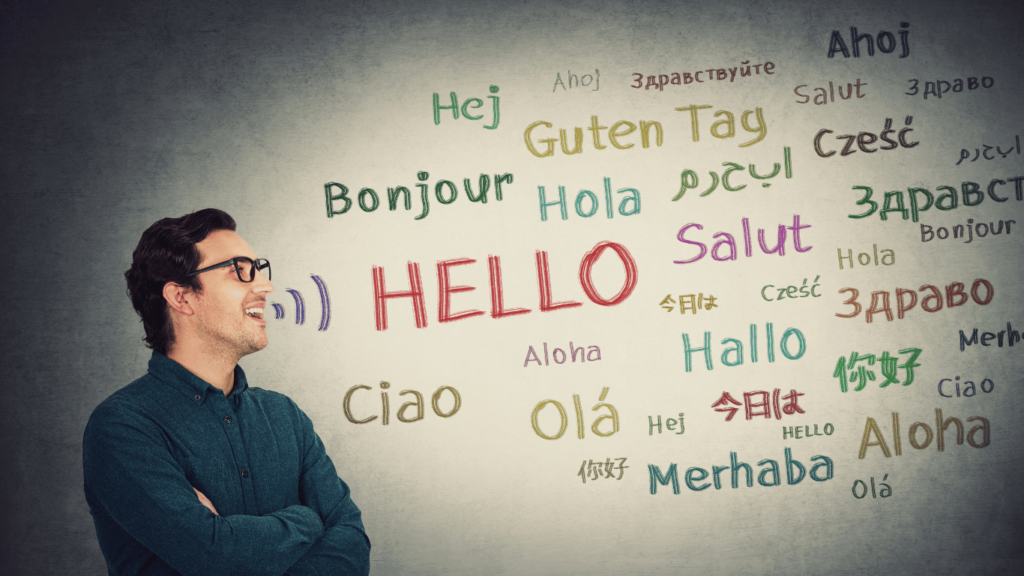
Your inbox on a normal Tuesday: a question in Dutch about your opening hours, a German couple asking whether you deliver to their urbanisation, a Spanish supplier, and a British customer who wants to know if you can do the job before August. Four languages before lunch. You can’t put a fluent speaker of each on the payroll — and you don’t need to.
The reason this used to be expensive is that the only answer was people. That’s no longer true. A multilingual website plus a well-trained AI assistant lets you serve customers in their own language, around the clock, for a fraction of what a multilingual team would cost. This article is, conveniently, its own example: the assistant in the corner of this site does exactly what’s described below.
Why “we’ll just use Google Translate” isn’t enough
Browser translation has its place, but leaning on it for your business is a quiet liability. Machine translation of a whole site tends to read slightly off in a way that undermines trust, and it mistranslates precisely the things that matter most — prices, service names, legal terms, your own brand voice. Worse, a one-time automatic translation goes stale the moment you change a price or add a service; the languages drift apart and you don’t notice until a customer does.
And translation only solves half the problem. It turns your pages into other languages. It does nothing for the live back-and-forth of actual support — the questions a visitor asks before they’re willing to buy. That’s a separate job, and it’s where most of the friction lives.
A multilingual website that stays in sync
The right foundation is proper language versions of your site, not a translate-on-the-fly widget bolted on top. On WordPress we manage this with established translation tools like Polylang or TranslatePress, which keep each language as a real, indexable version of the page. That matters for two reasons: visitors get a site that reads naturally in their language, and search engines can actually find your Dutch page when someone searches in Dutch.
The other advantage is that the languages stay in sync as your content grows. Change a price or publish a new service once, and the structure is there to keep every language version aligned — instead of remembering to manually edit the same thing four times.
Letting an AI assistant handle the multilingual front line
Most of the questions a business gets are variations on the same handful: hours, location, pricing, what you do and don’t offer, how to get started. An AI assistant trained on your own content can answer those instantly, at any hour, in whatever language the visitor writes in — and then hand over to you, or to a contact form, the moment something genuinely needs a human.
The fear people have is that a chatbot will sound robotic or invent things. That comes down to setup. Because we train the assistant on your real information — your services, prices, policies and tone — it answers in your voice rather than in generic filler, and it stays accurate because it’s drawing from what’s actually true about your business. It’s the difference between a bot that frustrates people and one that quietly does the first round of customer service for you.
Chatbot vs. form: two roles, both needed
It’s tempting to think you have to choose. You don’t — they do different jobs. The chatbot is the engagement layer: it keeps visitors moving, answers the immediate question, and removes the reason someone would otherwise click away. The contact form is the conversion layer: it captures the structured details you need to follow up properly and turn interest into a booking.
The two work best together, with the assistant pointing people to the form once they’re ready to take the next step. One keeps the conversation alive; the other makes sure you can actually act on it.
Which languages make sense on the Costa Blanca
For most businesses in this area, English, Spanish, Dutch, French and German cover the large majority of both the international and local market. But the honest answer is: start with the languages your actual customers use. You don’t have to launch all four at once. Add a language when there’s real demand behind it, rather than translating into a language nobody’s asking you in.
How we set this up
This page is the demonstration. We design and build the multilingual site, set up the translation workflow so your languages stay consistent as you grow, and configure and train the AI assistant on your content — so support works across languages from day one. You end up with something that looks after the routine multilingual load on its own, and only brings you in when it’s worth your time.
Frequently asked questions
Can you build my website in more than one language?
Yes. We build multilingual sites — typically English, Dutch, Spanish for the Costa Blanca market — so each visitor reads your site in their own language. On WordPress we manage this with translation tools like Polylang or TranslatePress, so the languages stay in sync as your content grows.
How do I handle customer questions in several languages without hiring multilingual staff?
An AI assistant on your site can understand and reply in each visitor’s language, around the clock, for the routine questions that make up most of your inbox. It handles the repetitive multilingual load and hands over to you — or to a contact form — when something needs a human. The assistant in the corner of this site is a live example.
Will an AI chatbot sound robotic or off-brand?
That depends on how it’s set up. We train the assistant on your own content — your services, prices, policies and tone of voice — so it answers in your voice rather than in generic phrasing. Because it draws from your real information, it stays accurate and on-brand.
What’s the difference between the chatbot and the contact form on your site?
They do different jobs. The chatbot is the engagement layer: it answers questions instantly and keeps visitors moving. The form is the conversion layer: it captures the structured details you need to follow up properly. Most sites benefit from both, with the chatbot pointing people to the form once they’re ready.
Which languages make sense for a Costa Blanca business?
It depends on your customers, but English, Spanish, Dutch, French and German cover most of the international and local market in this area. You don’t have to launch all of them at once — start with the languages your actual customers use and add more as you grow.
What does Levantic do here?
We design and build the multilingual site, set up the translation workflow so it stays consistent, and configure and train the AI assistant on your content — so support works across languages from day one.
Curious what this would look like for your business? Start with a quick scan — or just ask the assistant in the corner, in whatever language you like.
 English
  Español
  Nederlands
No responses yet